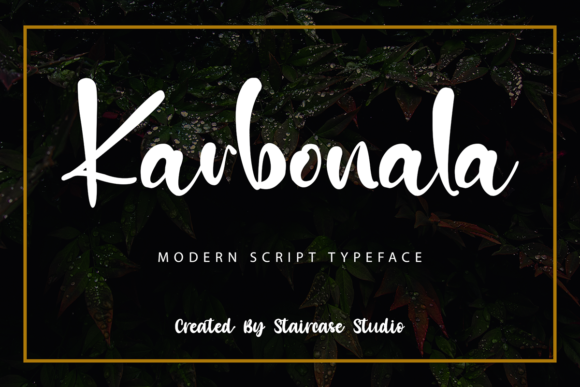
Karbonala: A Script Font for Web Design
As a web designer, I'm always on the lookout for fonts that can elevate a website's visual identity without compromising readability. Karbonala, a modern script font from the Script Amp collection, has quickly become one of my go-to choices for adding personality to digital projects. Whether it's a hero section, a call-to-action button, or a landing page headline, Karbonala brings a touch of elegance and creativity that feels both fresh and professional.
First Impressions: A Font That Speaks to Creativity
Testing Karbonala in a new portfolio site felt like discovering a hidden gem. The font has a smooth, flowing style that feels handcrafted yet polished. It’s not overly ornate, which makes it versatile for a range of digital applications. Its curves are fluid, its weight balanced, and its character set comprehensive enough to support most design needs. From the first glance, it was clear this wasn’t just another generic script font—it had a distinct voice that could enhance a brand’s tone and message.
Using Karbonala in Web Layouts
I started by placing it in a hero section of a boutique online store. The large text stood out against a minimalist background, drawing attention without overwhelming the viewer. It worked especially well when paired with a clean sans serif font for body copy, creating a nice contrast between the decorative headline and the functional text below. The font’s legibility at larger sizes made it ideal for headings, while its subtle details added a sense of craftsmanship to the overall design.
On mobile devices, Karbonala maintained its clarity even at smaller sizes, which is crucial for responsive web design. I tested it on a product landing page, where it was used as a headline for a new line of handmade soaps. The font’s organic feel complemented the natural aesthetic of the products, reinforcing the brand’s commitment to quality and artistry.
When to Use Karbonala and When to Avoid It
Karbonala shines in areas where visual impact matters most. It’s perfect for headlines, logos, and short phrases that need to stand out. For example, using it in a course sales page header gave the content a more personal and inviting feel. It also worked well in a blog graphic, where it was used as a subheading to add a touch of flair without distracting from the main message.
However, there are scenarios where Karbonala might not be the best choice. Long paragraphs of text, especially on smaller screens, can become difficult to read. I noticed that when used in form labels or navigation menus, the font lost some of its clarity. In those cases, a simpler typeface would have been more appropriate. It’s important to consider the context and ensure the font aligns with the user experience goals of the website.
Font Pairing and Web Performance
One of the strengths of Karbonala is how well it pairs with other fonts. I experimented with a bold sans serif for body text and found that the combination created a balanced, modern look. For a more editorial feel, pairing it with a classic serif font also worked beautifully. The key is to let Karbonala take center stage in areas where it can make an impact, while letting other fonts handle the more functional aspects of the design.
In terms of performance, Karbonala’s webfont files were lightweight and loaded quickly, which is essential for maintaining fast page speeds. I also checked its multilingual support, and it handled common characters and accents without issue. This makes it a solid choice for international websites or brands targeting diverse audiences.
Final Thoughts on Karbonala for Web Design
Karbonala isn’t just a pretty font—it’s a tool that can help shape a brand’s digital presence. Its modern script style adds a human touch to otherwise static designs, making it ideal for creative businesses looking to stand out. Whether you're designing a personal portfolio, an online store, or a marketing campaign, Karbonala offers a unique blend of beauty and usability that can elevate your work.
For web designers and digital creators, Karbonala is a valuable addition to any design toolkit. Just remember to use it strategically, pair it wisely, and always test it across different screen sizes and backgrounds to ensure it meets your project’s needs.